

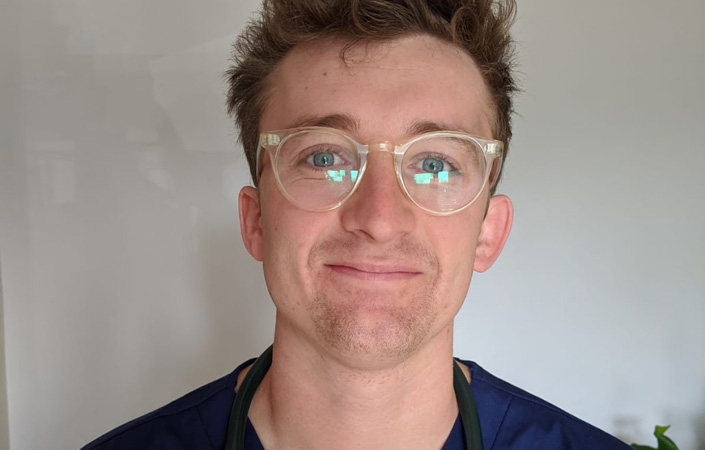
Last May I interviewed Dr Silas Webb, about working as a junior doctor on a Covid ward at St George’s hospital. I caught up with him to see how life has been since
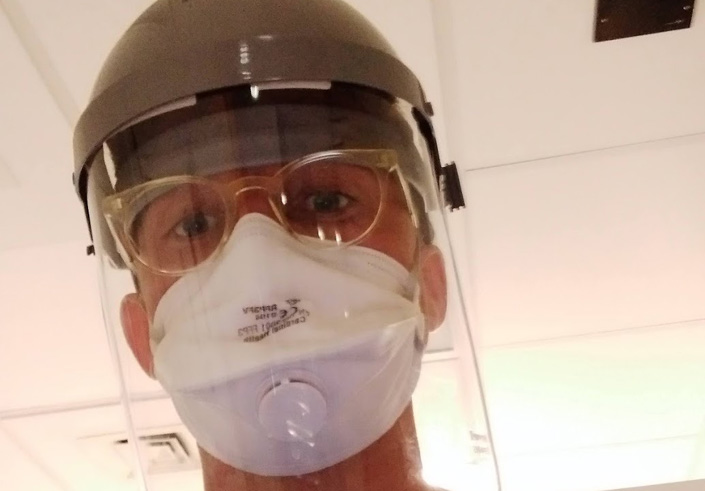 When I last interviewed Dr Silas Webb, he was being confronted by death every day, almost overwhelmed by the huge numbers of patients coming into his ward, like every hospital across the country.
He spent many more months on the Covid ward after we talked, and when for a short time the number of patients entering hospital eased, the type of care he was giving shifted – there were less people dying, but those who were saved stayed seriously ill for many months: ‘Thankfully, there were less new patients, but lots of people were in intensive care for a long time. I was looking after those long stay patients who were still seriously ill in intensive care. They may have got over the extreme part of the virus, but they are massively at risk from all the other complications of just having been in a hospital bed on a ventilator for three months.’ And once normal operations started again, Silas was working with other intensive care patients.
Silas was a relatively new doctor at the start of pandemic and first lockdown but, he says, those who were new to the job then, just due to the sheer number of cases they were working on at the time are, just a few months later, mentoring the new doctors and nurses coming in.
The emotional impact on NHS workers has been huge and Silas feels that he, and others working on the wards like him, haven’t yet had a chance to process what they have been through. ‘I was exhausted then and I’m exhausted now. I don’t know if I’ve had the space for reflection yet. When you’ve gone through something so emotionally intense – and time intense – you bond with colleagues and your mentors. Medicine is always about rotating during your training, so you’re used to spending six months to a year in places, but it was different because it felt like quite an historic moment that we were working in.’
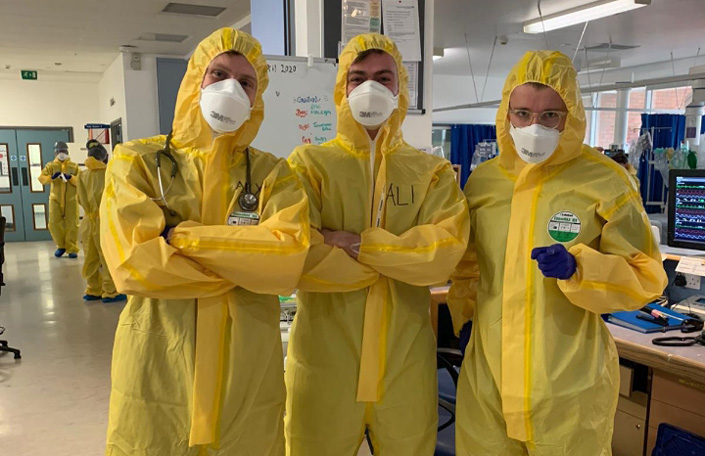 He sees his career in emergency medicine and is now working in A&E at St Mary’s Paddington but feels that he, like other doctors are just ‘battling on rather than actually looking after ourselves.’
The silver lining is, of course, the number of vaccines currently being administered across the country: ‘It represents the only way of seeing what we previously called normality coming back.
Silas’s biggest wish is simple. To be able to hug his parents who, since the beginning of the pandemic, he has only seen from across the garden or through the letterbox. ‘Everyone is realising actually how important human touch is. It is a massively important part of our emotional wellbeing to feel close to the people we love.’ Those who have lost loved ones to the pandemic will never be able to have that last hug, bu thanks to people like Silas, hopefully the time is not too far off that we can once again hold those we love close.
Pippa Duncan
Read our previous article on Dr Silas Webb here.