

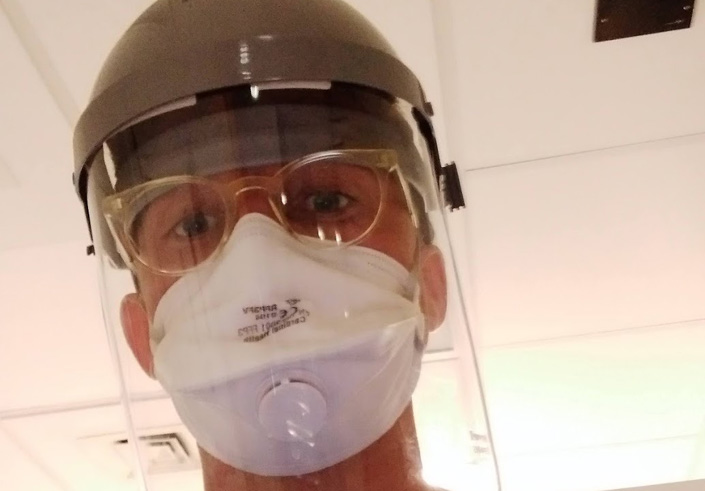
Silas Webb is a dedicated Junior doctor at St George’s hospital. As the pandemic swept across London leaving our beloved NHS reeling, he was transferred from A&E to the Intensive Care Unit Covid-19 ward. Here, he talks to Pippa Duncan about living life on the frontline
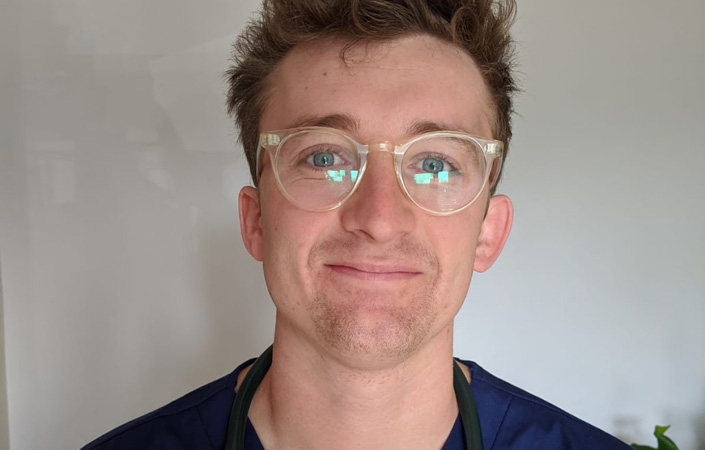 Most of us living in South West London will have needed to visit St George’s hospital at some point in our lives – antenatal appointments, kids with broken bones, parents with a degenerative disease. We’ve sat in A&E or walked the endlessly long corridors, trying to find the right wing, the right ward. For the nurses, doctors, admin staff, cleaners, life there has changed irrevocably over the last months. Those working on Covid wards, like Silas, are confronted with death every day, as well as being highly aware that their own lives are at risk.
‘Being confronted with death and dying on a scale that I don’t think anyone’s seen before, kind of takes its toll,’ says Silas, as we chat on one of his rare days off, via Zoom. ‘There was a point early one where quite a lot of my colleagues were going off sick and a lot of the consultants were unwell, so it was easy to feel a bit vulnerable. But I’m in a pretty privileged position in that I’m in my twenties and don’t have an underlying health condition. So, although I know that there is a possibility of becoming unwell, I know it’s much smaller than some other people I know who are coming to work and making bigger sacrifices.’
Working on the ICU (intensive care unit) for Covid patients, Silas says that having the correct PPE hasn’t  been a problem, as they are a high priority unit. As soon as he gets to the hospital, he takes off and protects his own clothes, before donning his gown, mask and visor to enter the ward.
At the height of the pandemic, there were five Covid wards at St George’s, each with around 20-24 patients. Ideally there is one nurse to one patient, as each monitoring is so intensive. Nurses are the ones who will spot things going wrong before doctors, says Silas, are they are constantly with their patient. Each patient will also have five or six doctors working with them – from the consultants who are the decision makers down to the junior doctors, like Silas.
Once Silas starts his shift, he is assigned his patients for the day: ‘I will review what’s happened to them overnight, understand whether things are going in the right direction or if they’re kind of static, or if the patient is deteriorating. I assess each one of their organ systems in turn. The thing with intensive care is that it is very systematic and it’s very comprehensive. The attention to the details is the most important part of it. We monitor every minute of someone’s physioloy and not to do that, you’re potentially missing things, so you’ll assess each one of their organ systems in turn.
As Silas says, ‘I’m working with the sickest of the sick’. Patients coming into intensive care are given a trial of masked ventilation. If this isn’t enough to help them breathe, the next step is sedation and mechanical ventilation. ‘90% plus of people on the Covid ward are on a ventilator.’
‘It’s nice to get to know their name, tell them you’ve spoken to their family. There’s still a humanity in the conversation, even if it is a bit one way.’
Talking to their families is an important, if sometimes difficult, part of his job. He will have spent day upon day of 12-hour shifts, monitoring every aspect of his patient, he can tell their families more about them than they could ever know. ‘It’s something I can offer, to give a bit of time. To communicate with loved ones. They know my voice, my name. It puts you in a good as place you can be to have the really difficult conversations.’
And there are, inevitably, difficult conversations. ‘If someone’s on 100% oxygen through a ventilator at high pressure and they’re still not able to get enough to all of their organs, or if their kidneys have stopped working and their blood pressure keeps dropping, that suggests we’re reaching a point when we may not be able to do much more.’ It takes multiple people within the Covid team to decide that stopping treatment is the right decision for that patient, alongside dialogue with their family.
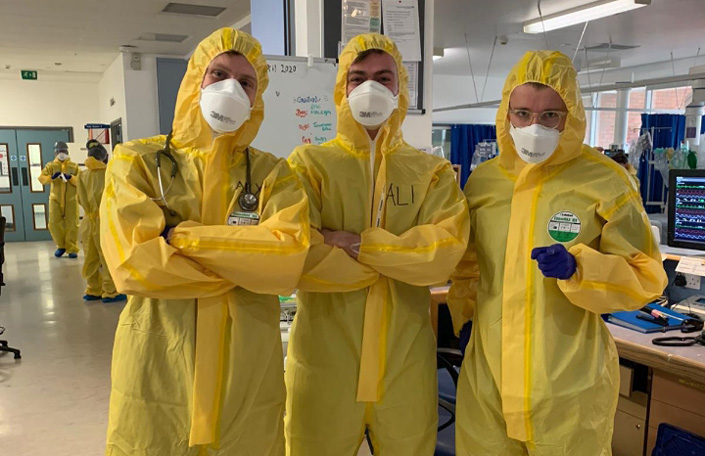 Silas has nothing but praise for his team and how supportive they have been of a young doctor, well and truly thrown in at the deep end of medicine at the start of his career. And he feels he has learned some things in a few weeks that might have taken him years in ordinary life – how to process his emotions at a time of intense stress, how to talk to families about dying at the most difficult times in their lives, to be an effective cog in the huge and vital machine that is the NHS.
Dr Silas Webb has a blog The Silver Linings Handbook for new doctors in the same position as him on Twitter: @Silas_Webb
Find more stories about local people here.