

Curtains, blinds or even shutters – the right window treatment can make or break a room. We look at how to choose the best option for your home.
While maintaining privacy and blocking early-morning light may be their primary functions, window treatments are also a key part of an interior design scheme, adding colour, pattern, texture and an essential element of sophistication. They can also correct a badly proportioned window, disguise an unattractive view, filter bright light and provide a visual link between inside and out. But where should one start?
While aesthetics are important, practicality should come first. Is the window overlooked? What does it look onto? Is it an unusual size or shape? Is there room for curtains to ‘stack back’ on each side? What is below the window? Is complete blackout in the room necessary? Does the window treatment need to be splash-proof? Once you have considered all the basics, think about the overall style of your home and what else is in the room, and start to narrow down the options.
Curtains
When choosing curtains, the colour, pattern and weight of the fabric are the important factors, as is the style of hanging. Generally, grander curtains tend to suit larger, period rooms (pelmets, swags and tails may also be an option in this case), while simple curtains are more suited to modern properties. Check the heading, as this determines the way the curtain will hang: usually, a tape sewn to the top of the fabric is pulled to form either loose gathers or more formal pleats, and is hooked onto curtain rings. Other styles include tab, tie, eyelet or hemmed tops, which look decorative but can sometimes be harder to draw.
Curtain poles are designed to be on show and come in a variety of materials, with finials at each end that are either simple or ornamental. Sometimes, however, a curtain track is more suitable than a pole: they can be mounted either on the wall or the ceiling, can be bent around bays, and need less clearance above a window.
To gain maximum natural light, fit a pole or track that hangs far enough from each side of the window to allow the curtains to be drawn right away from it. Floor-length curtains are generally better than sill-length, though shorter curtains may be more appropriate when radiators, window seats or furnishings are in the way. Linings are essential on all but sheers; they help curtains hang neatly and protect them from fading, dirt and condensation. Blackout linings are ideal in a bedroom, while thermal linings can be as effective an insulator as double glazing.
Blinds
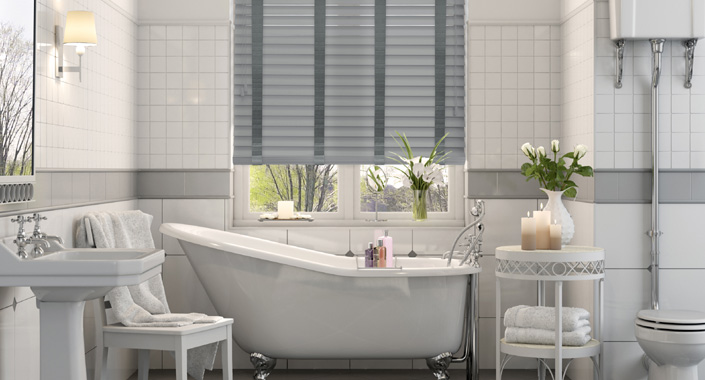
Perfect for smaller rooms, blinds are also great for modern homes and in bathrooms and kitchens – and they tend to be a lot cheaper than curtains. Roller blinds are the most basic style, while roll-up versions, tied with tape or ribbon, have a pretty yet still simple look. Roman blinds are smart and versatile, suiting almost every room. Choose fabric that is mid-weight and not too textured, as blinds need to roll or fold easily against themselves. There is nothing to stop you combining more than one colour or pattern, in the form of smart, contrast borders down the sides or along the bottom of the blind. And sometimes it is a good idea to combine a plain and a sheer fabric, to allow light through at the top of the window while giving privacy beneath. Plain blinds can be boosted with a good-looking pull (think leather, glass, raffia, stone or rope) or trim (such as ribbon, pom poms, ric rac, stitching, fringing, shells or buttons). If you want a dressier look, add curtains as well.
Shutters
Good-looking in an unfussy way, shutters suit both old and new properties. They are expensive but are good at blocking out sound and light, and can even provide extra security. The plainest shutters feature a timber frame and solid centre panel (a local joiner should be able to make them for you), while louvred versions (from specialist shutter companies) offer privacy while also controlling light. Both types can be left as natural wood or painted whatever colour you like. They can be made as a pair, bi-fold, tri-fold or more, either full-height, half-height or one set above another, and fitted within a reveal or to fold back against the walls.
For more Homes & Gardens features, click here.